December 1989
PC Cyborg AIDS Trojan — first known ransomware
In December 1989, thousands of floppy diskRemovable magnetic storage on a flexible disk — the main way PCs exchanged files before USB and the web.s mailed to AIDS conference attendees carried the PCPersonal computer — a computer designed for individual use, especially desktop or laptop machines. Cyborg Trojan — the earliest documented ransomwareMalware that encrypts files and demands payment — a major threat to businesses and hospitals., encrypting files and demanding payment by mail.
What it was for
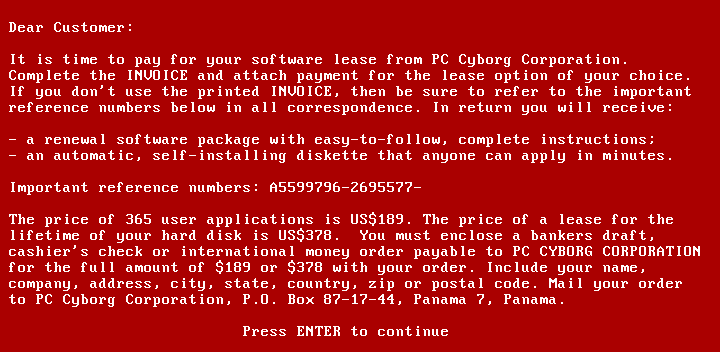 The "AIDS Information Introductory Disk" hid malwareMalicious software — viruses, worms, trojans, and ransomware designed to harm systems or steal data. that counted reboots and eventually locked the system, demanding $189 to a Panama mailbox. It predated crypto-ransomwareMalware that encrypts files and demands payment — a major threat to businesses and hospitals. by decades but established the extortion pattern WannaCry and Colonial Pipeline attackers would later automate with BitcoinThe first decentralized cryptocurrency — a proof-of-work blockchain without a central issuer. and leaked exploits.
Why it's here
The AIDS Trojan is the first recorded ransomwareMalware that encrypts files and demands payment — a major threat to businesses and hospitals. attack in computing history.
Why it mattered
It proved data hostage-taking worked before the internet made propagation trivial.
What it solved
Nothing was solved — it introduced a threat model vendors ignored for twenty years.
Media
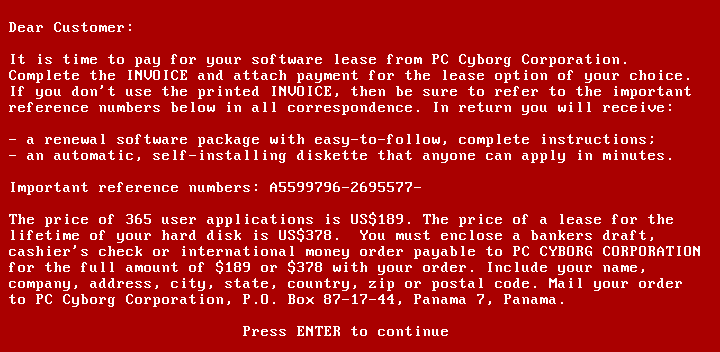 ImageAIDS (Trojan horse)
Joseph L. Popp, AIDS Information Trojan author, Public domain, via Wikimedia Commons
Related
- Brain boot-sector virus spreads on PCsJanuary 1986
- WannaCry ransomware spreads worldwideMay 12, 2017
- Morris worm spreads on the internetNovember 2, 1988