May 1949
EDSAC Initial Orders assembler
By May 1949, David Wheeler's Initial Orders let EDSAC translate mnemonic instructions from paper tape into machine codeBinary instructions a CPU executes directly — what compilers and assemblers ultimately produce. — the first assembler.
What it was for
 Before assemblers, programmers punched raw binary numbers for every instruction. Wheeler's Initial Orders — a small boot program loaded at startup — read labels like `A 80` from tape and wrote the 17-bit words EDSAC executed. The same month EDSAC ran its first user programs, this loader made programming faster and launched the idea behind every compiler since.
Why it's here
Initial Orders turned mnemonic programming into machine codeBinary instructions a CPU executes directly — what compilers and assemblers ultimately produce. automatically — the birth of assembly languageA low-level human-readable form of machine instructions — one step above raw binary code..
Why it mattered
Automating instruction translation made programming repeatable and scalable as computers grew more capable.
What it solved
Human transcription of machine instructions was slow, error-prone, and did not scale.
Media
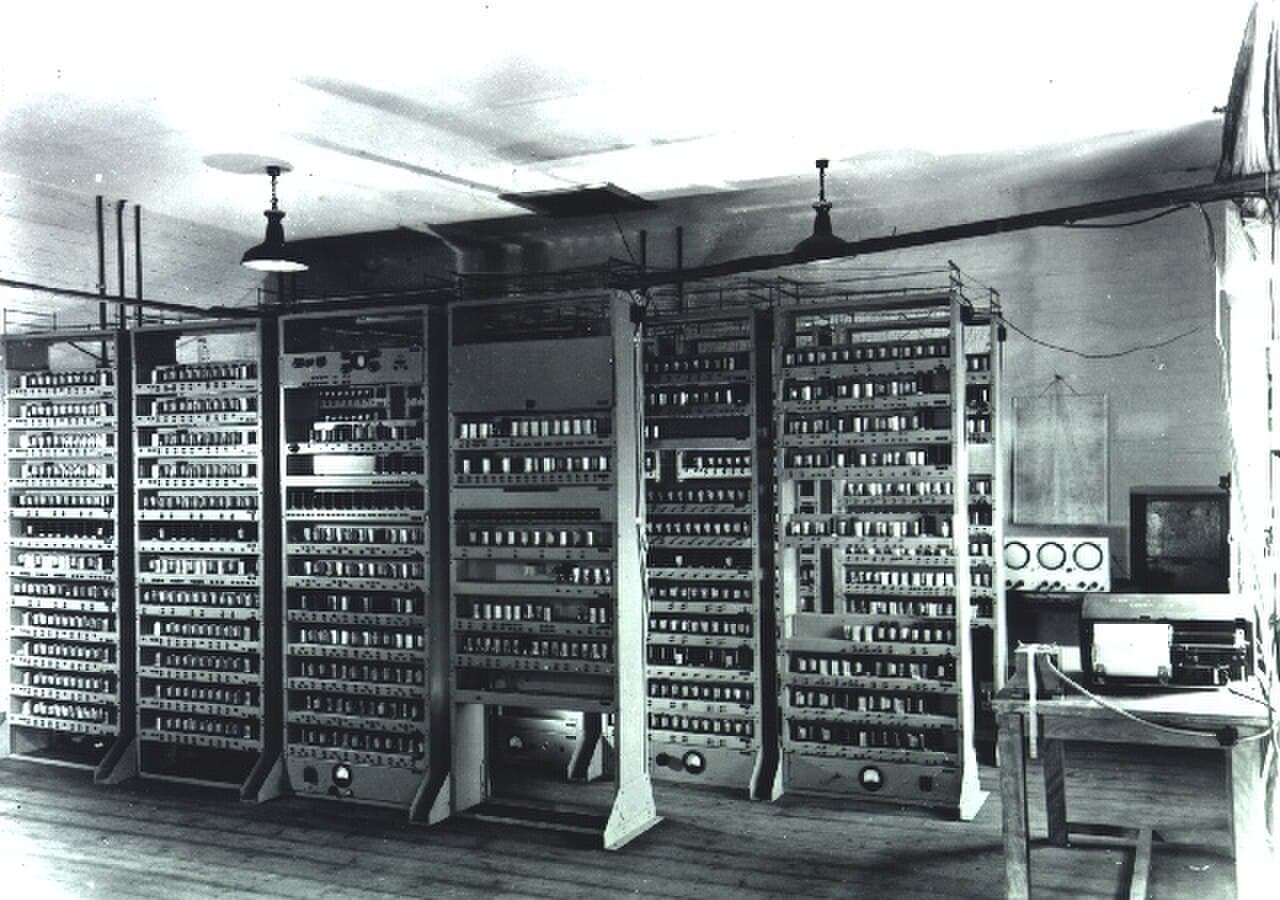 ImageEDSAC at Cambridge (1948)
Computer Laboratory, University of Cambridge. Reproduced by permission. CC BY 2.0, via Wikimedia Commons
Related
- EDSAC runs its first programsMay 6, 1949