March 1993
Lynx 2.0 gains World Wide Web support
Lynx 2.0 shipped in March 1993 with World Wide Web support — turning the University of Kansas text browser into a terminal client for HTMLHyperText Markup Language — the standard markup for structuring web pages. pages.
What it was for
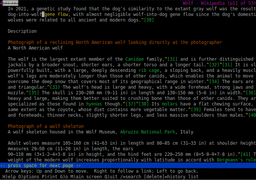 Lynx rendered pages as plain text in a terminal: links listed by number, no images, no JavaScript. It stayed essential on slow connections, blind-accessible browsing, and server-side automationUsing machines or software to perform tasks with minimal human intervention. for decades — and still runs today for scripting and accessibility testing.
Why it's here
Lynx 2.0 brought the early web to text terminals before MosaicAn early graphical web browser — helped popularize the World Wide Web beyond researchers. popularized graphics.
Why it mattered
It made the web usable on UnixAn influential multitasking OS from the 1970s — files, pipes, and C shaped Linux, macOS, and BSD. shells and influenced accessibility and command-line tooling.
What it solved
Researchers and students on UnixAn influential multitasking OS from the 1970s — files, pipes, and C shaped Linux, macOS, and BSD. shells needed a keyboard-driven way to read HTMLHyperText Markup Language — the standard markup for structuring web pages. documents.
Media
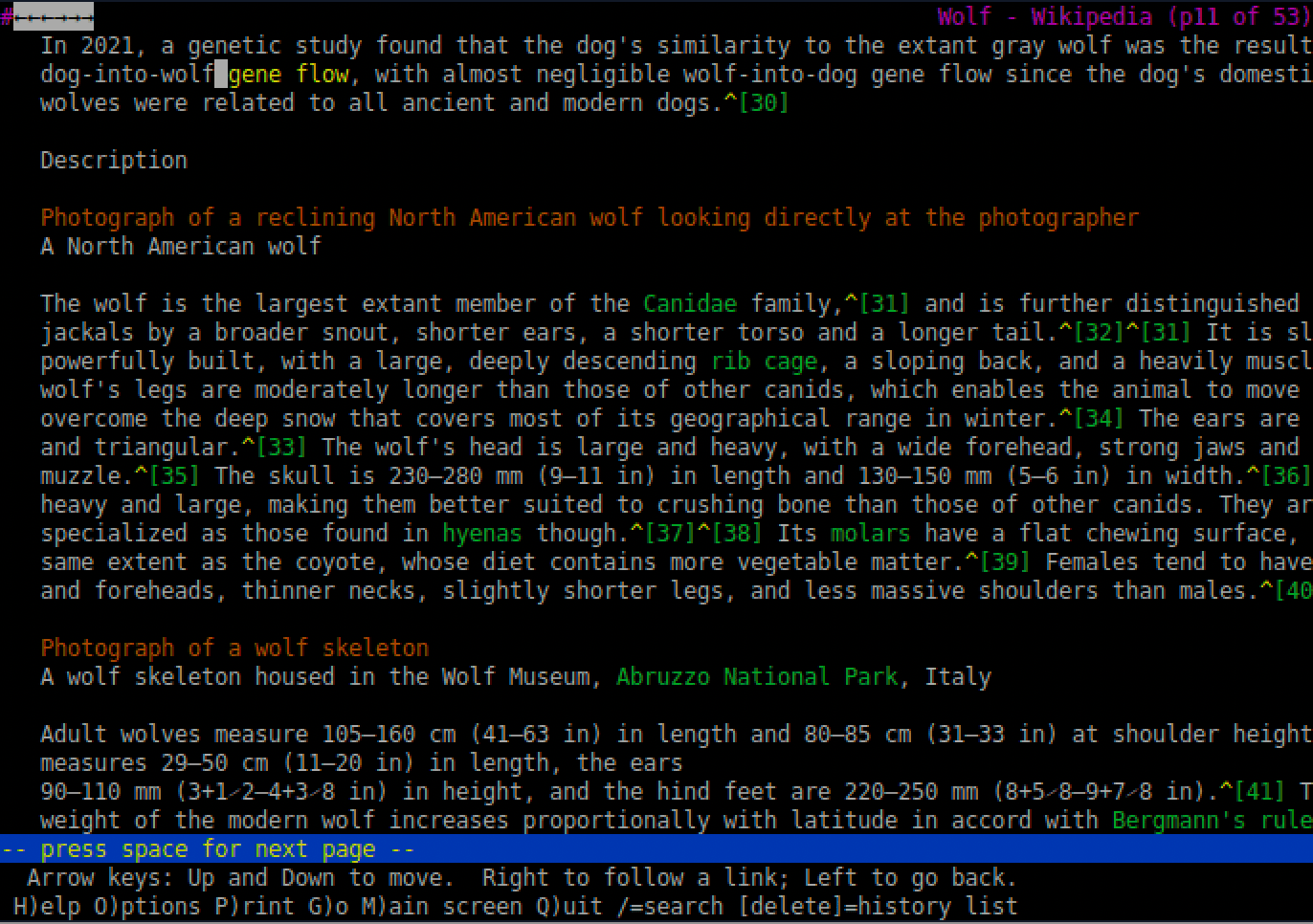 ImageLynx (web browser)
Screenshot created by User:Aoidh. For attribution of the Lynx software, see https://lynx.invisible-island.net and for the attribution of the Wikipedia article, see the page history of https://en.wikipedia.org/wiki/Wolf, CC BY-SA 4.0, via Wikimedia Commons
Related
- University of Kansas team creates Lynx1992
- NCSA Mosaic 1.0 releasedApril 21, 1993