August 10, 1937
Shannon applies Boolean algebra to switching circuits
Claude Shannon submitted his MITMassachusetts Institute of Technology — a research university central to many computing breakthroughs. master's thesis on August 10, 1937 — showing that Boolean algebraMathematics using true/false values and AND, OR, NOT — the symbolic basis of digital logic design. can systematically design relayAn electrically operated switch using a magnet to open or close contacts — early digital circuits used thousands of relays. and switching circuitsCircuits that route signals through switches such as relays or transistors — the physical layer Shannon modeled with logic..
What it was for
 Shannon proved circuit design is isomorphicA structural correspondence between two domains — Shannon showed Boolean algebra and switching circuits map one-to-one. to logic: AND, OR, and NOT maps directly to switches and relays. Every digital chip, from 1940s telephone exchangeA facility routing phone calls through switches — early electromechanical exchanges inspired digital switching research.s to modern CPUCentral processing unit — the primary chip that executes program instructions.s, inherits this insight that hardware is executable Boolean algebraMathematics using true/false values and AND, OR, NOT — the symbolic basis of digital logic design..
People
- Claude Shannon — researcher
Why it's here
This thesis is often called the most important master's thesis of the 20th century.
Why it mattered
It turned circuit design from craft into symbolic manipulation — the ancestor of hardware description languages.
What it solved
Engineers designed relayAn electrically operated switch using a magnet to open or close contacts — early digital circuits used thousands of relays. networks by trial and error with no unified mathematical method.
Media
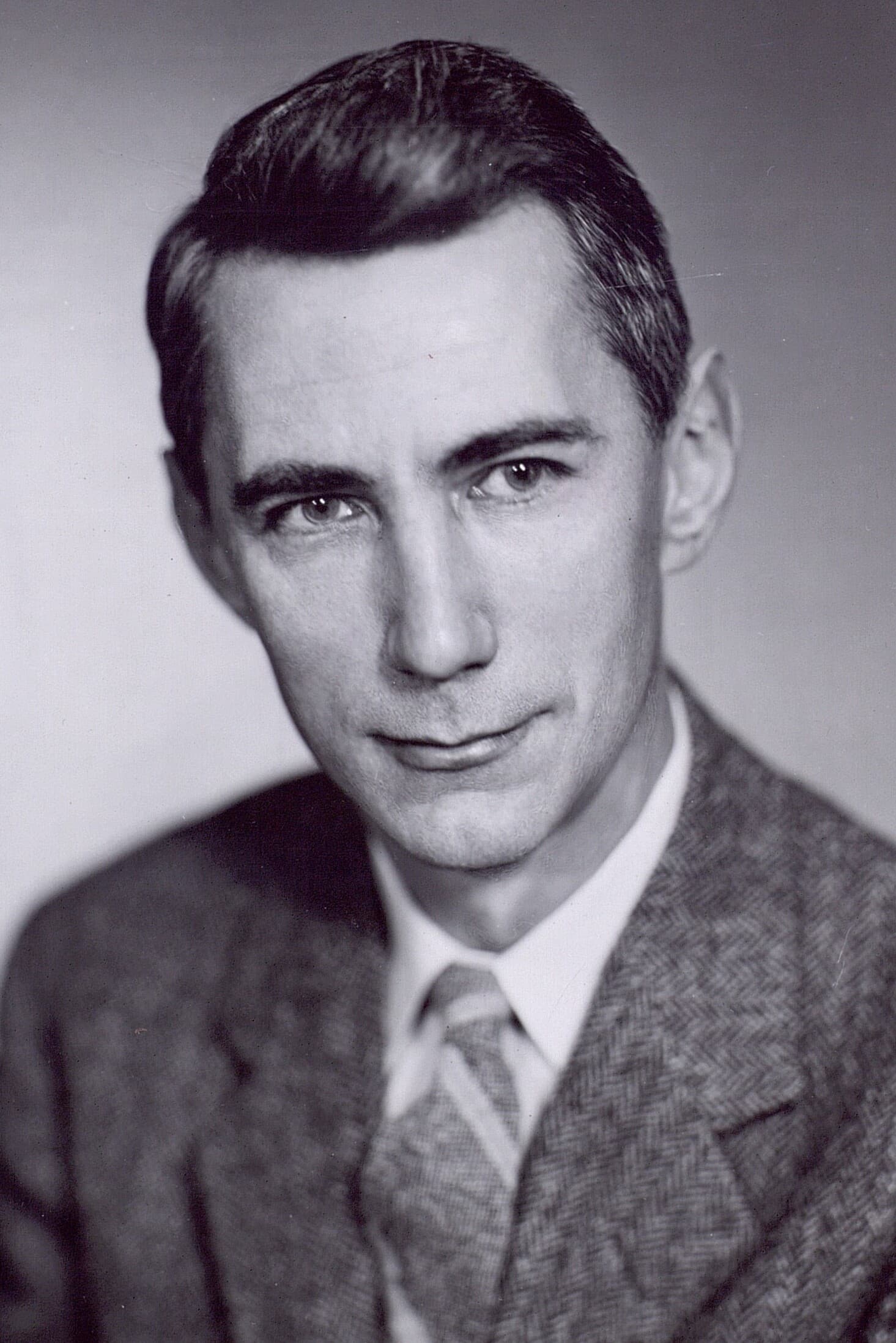 ImageClaude Shannon
Tekniska museet, CC BY 2.0, via Wikimedia Commons
Related
- Claude Shannon publishes information theoryOctober 1948
- Bell Labs demonstrates the transistorDecember 23, 1947