May 12, 1941
Konrad Zuse completes the Z3
Konrad Zuse completed the Z3 on May 12, 1941 — the first working programmable, fully automatic digital computer, using electromechanical relays.
What it was for
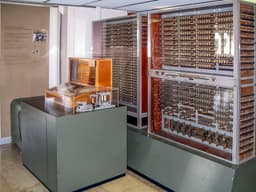 The Z3 read programs from punched film and could perform conditional branching — a stored-programA design where instructions and data share memory — programs can be loaded and changed without rewiring hardware. concept years before ENIAC. Destroyed in a 1943 bombing raid, it was rebuilt in the 1960s and is recognized as a TuringAlan Turing — mathematician who defined computability, broke Enigma, and posed the imitation game.-complete machine built for practical calculation.
People
- Konrad Zuse — creator
Why it's here
The Z3 was the first operational programmable digital computer.
Why it mattered
It proved automatic computation with stored instructions was achievable in wartime Europe.
What it solved
Engineers needed repeatable, programmable calculation without manual rewiring for every problem.
Media
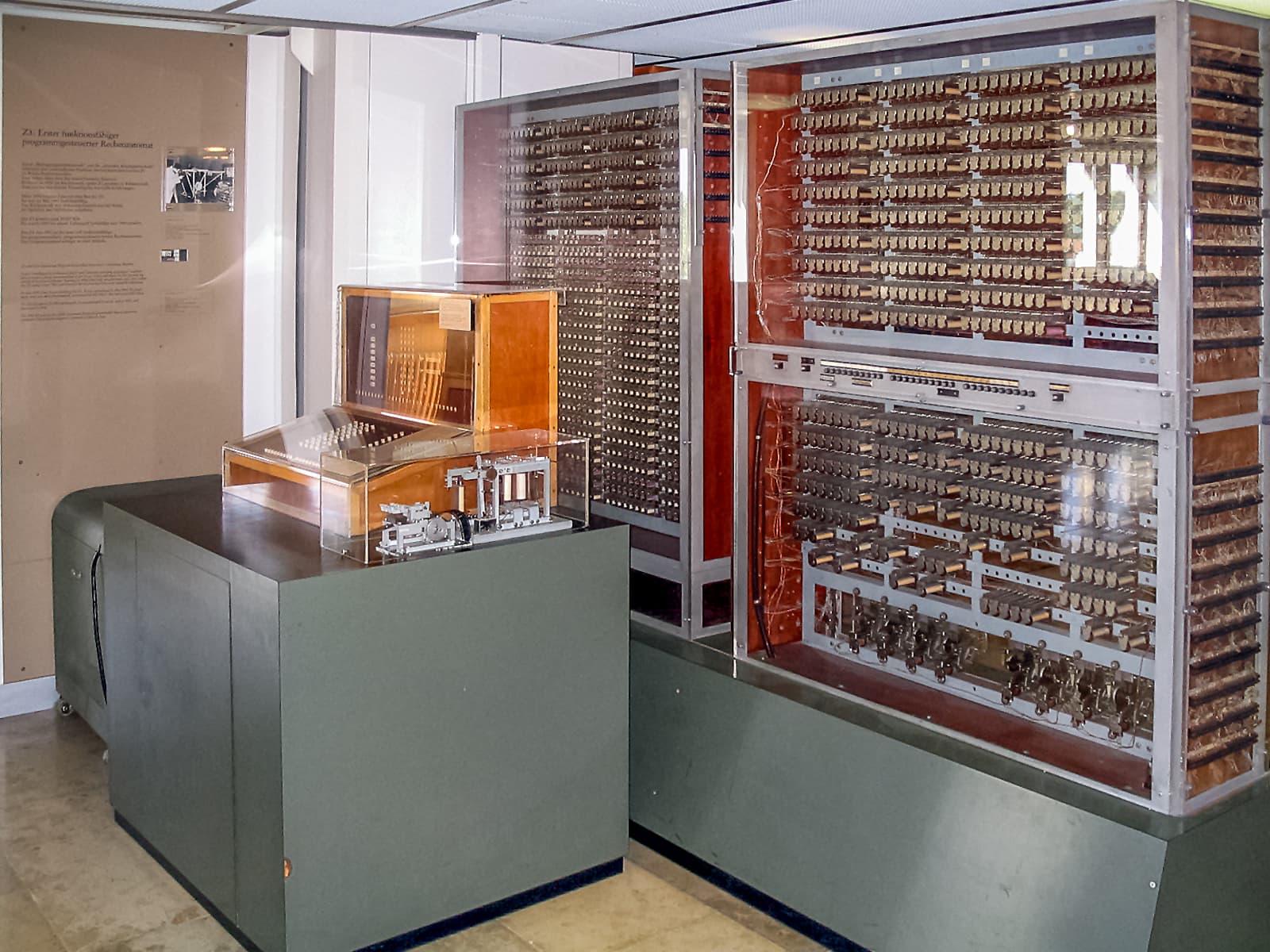 ImageZ3 at Deutsches Museum
Georgfotoart (derivative of Venusianer), CC BY-SA 3.0, via Wikimedia Commons
Related
- ENIAC formally dedicatedFebruary 15, 1946
- Harvard Mark I completedAugust 7, 1944
- Manchester Baby runs first stored programJune 21, 1948