October 1950
Turing: "Can machines think?"
TuringAlan Turing — mathematician who defined computability, broke Enigma, and posed the imitation game. opens his 1950 Mind paper by reframing the question of machine intelligenceThe capability of machines to perform tasks requiring human-like cognition — Turing's framing of AI. — leading to the imitation gameTuring's conversational test for machine intelligence — if replies match a human, capability matters more than definition. thought experiment.
Quote
“I propose to consider the question, 'Can machines think?'”
What it was for
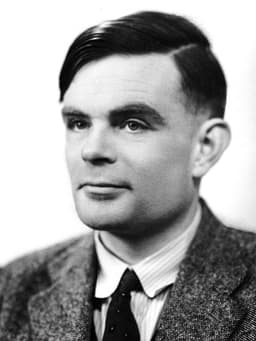 Instead of defining 'think,' TuringAlan Turing — mathematician who defined computability, broke Enigma, and posed the imitation game. proposed a conversational test: if a machine's answers are indistinguishable from a human's, the question of thinking becomes less important than observable capability. The opening line launched seventy years of AI debate.
People
- Alan Turing — researcher
Why it's here
The opening sentence of the most cited paper in AI philosophy.
Why it mattered
It shifted the debate from consciousness to measurable behavior.
What it solved
Philosophers could not agree what 'thinking' meant for humans, let alone machines.
Media
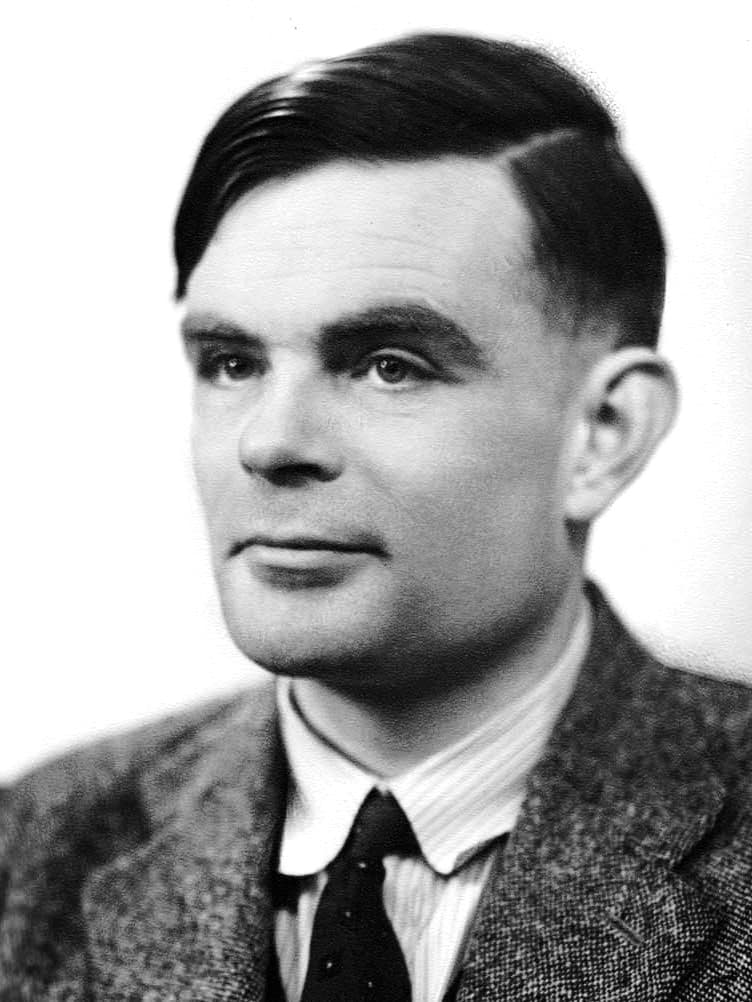 ImageAlan Turing
Elliott & Fry, public domain, via Wikimedia Commons