October 1950
Turing publishes Computing Machinery and Intelligence
Alan TuringAlan Turing — mathematician who defined computability, broke Enigma, and posed the imitation game.'s October 1950 Mind paper asked whether machines can think and proposed the imitation gameTuring's conversational test for machine intelligence — if replies match a human, capability matters more than definition. — now called the Turing testAlan Turing's criterion for machine intelligence — can a computer convincingly imitate a human in conversation?.
What it was for
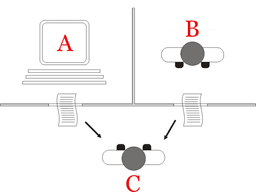 TuringAlan Turing — mathematician who defined computability, broke Enigma, and posed the imitation game. reframed intelligence as behavior observable over a teletypeA keyboard-printer terminal that sent and received text over wires — early way to interact with distant computers. conversation, not inner experience. The paper anticipated machine learningSystems that learn patterns from data rather than following only explicit programmed rules. objections, consciousness debates, and every chatbot benchmarkA standardized test suite for comparing systems — ImageNet, MLPerf, and SPEC define industry scoreboards. that followed — from ELIZA to modern LLMLarge language model — a neural network trained on vast text to generate and reason about language. evals.
People
- Alan Turing — researcher
Why it's here
This is the founding document of philosophy-of-AI and practical machine intelligenceThe capability of machines to perform tasks requiring human-like cognition — Turing's framing of AI. testing.
Why it mattered
It gave researchers a concrete experiment instead of endless definitions of 'thinking.'
What it solved
There was no operational way to discuss machine intelligenceThe capability of machines to perform tasks requiring human-like cognition — Turing's framing of AI. without metaphysics.
Media
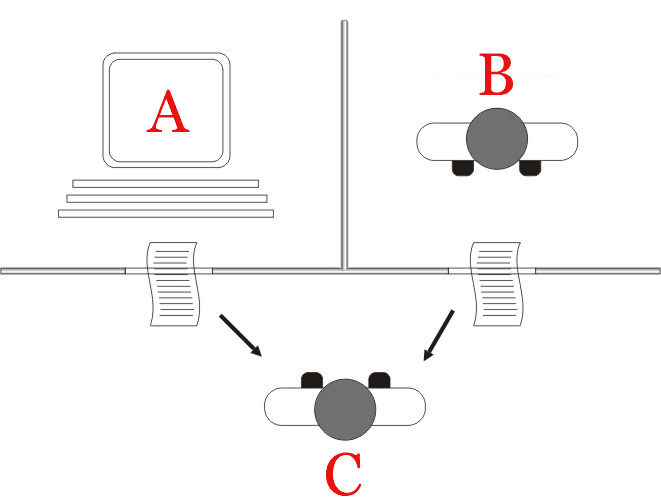 ImageTuring test diagram
Juan Alberto Sánchez Margallo, CC BY 2.5, via Wikimedia Commons